
When Structure Falls Out of Step with Strategy
No one decides to let structure and strategy drift apart. It happens quietly, one sensible decision at a time.
A need appears, so a capable person fills it. A team grows, so a few more people report to the same manager. Each choice makes sense in the moment. But strategy keeps moving forward and structure stays where it was set. Before long, the organization is running today's ambitions on yesterday's design.
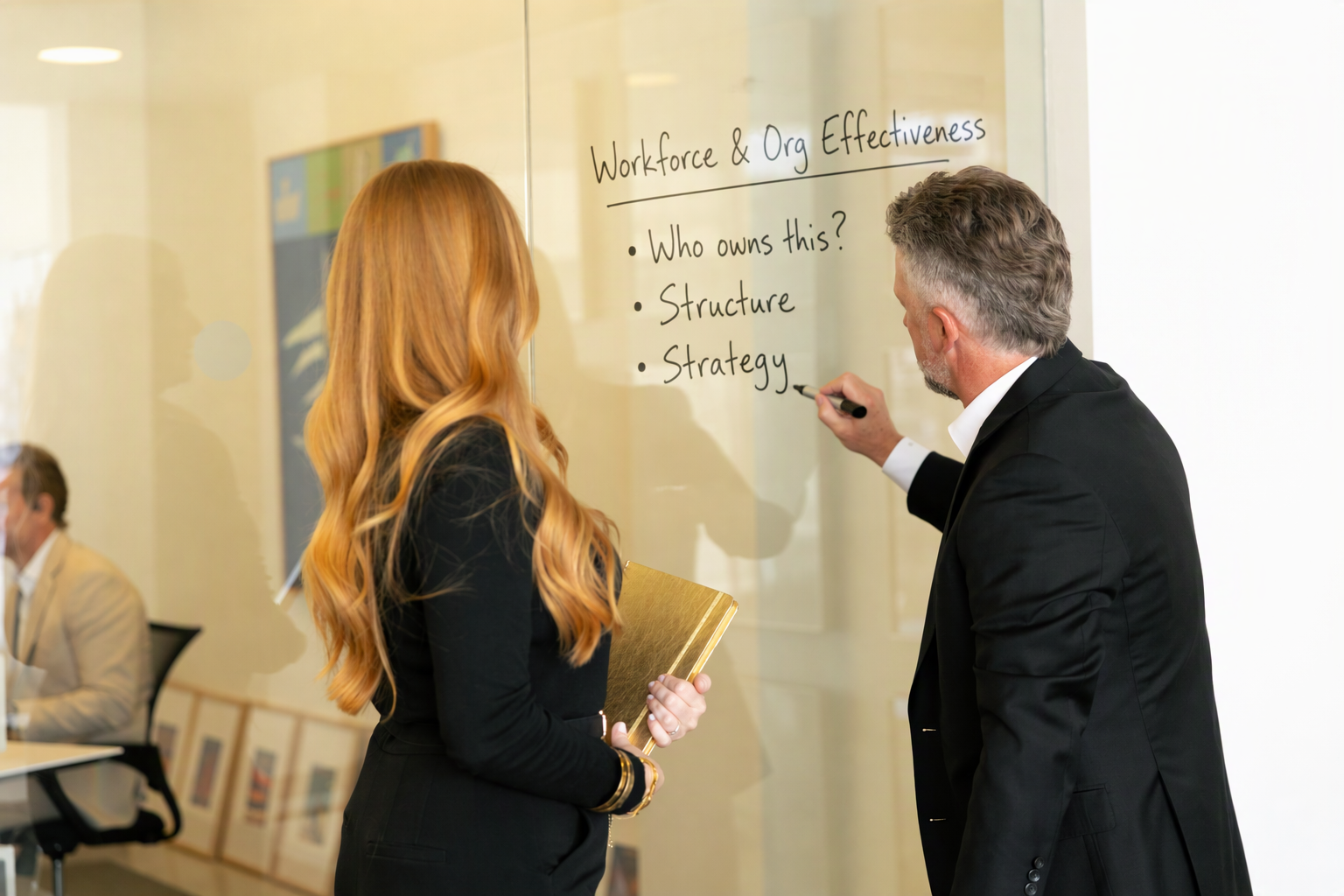
The first signal: "Who owns this?"
The drift rarely announces itself. It shows up in small moments of hesitation. A decision sits in someone's inbox because no one is sure they can make it. Two leaders both think a project is theirs, or both assume it belongs to the other.
These are not people problems. These are signs that roles and decision rights were defined for a different organization.
When accountability is unclear, decisions slow down, work gets duplicated, and talented people spend their energy on navigation rather than service.
The second signal: the structure that got you here
The structure that carried you through your early growth was probably right for its time. It was lean, flexible, and built around a few people who could do a bit of everything. The idea that “We’re all in this together.” is part of your early culture.
But the design that got you here needs to evolve to carry you forward. As demands increase, bottlenecks appear. Leaders stretch across too many priorities. Managers hesitate to speak up about risk or burnout because they worry they won’t be seen as team players. Growth reveals the limits of a structure long before anyone identifies them.
Bringing structure and strategy back together
At Lyt, we help leaders close that gap deliberately, rather than waiting for friction to force the issue. Our work starts with strategy: where the organization is heading and what it will need to do well to get there. From there, we look honestly at how work flows today.
We work with leadership teams to clarify roles and decision rights, so that "Who owns this?" has a clear answer, and accountability sits where it belongs. We assess capacity and readiness for growth, identifying where the organization is stretched, where succession risk is building, and which capabilities need to be developed or added.
We help design a structure that fits the strategy ahead. Just as importantly, we support leaders through the transition. A new structure only works when people understand it, trust it, and know how their role fits within it.
Throughout, we help leaders protect what makes their culture distinctive. Growth should not come at the cost of the core values that built the organization. The commitment that “We’re all in this together.” still stands, it just may look different day to day. The goal is to evolve responsibly, carrying forward what matters most while changing what no longer fits.
A question worth asking
Structure is not a one-time decision. It is something leaders revisit as the organization evolves. The most effective leaders do not wait for confusion or burnout to tell them something is off. They pause and ask: is the way we are organized still serving where we are going?
If that question feels harder to answer than it used to, that may be your signal. We would welcome the conversation.
Connect with Ellen at Lyt to talk through Workforce and Organization Effectiveness